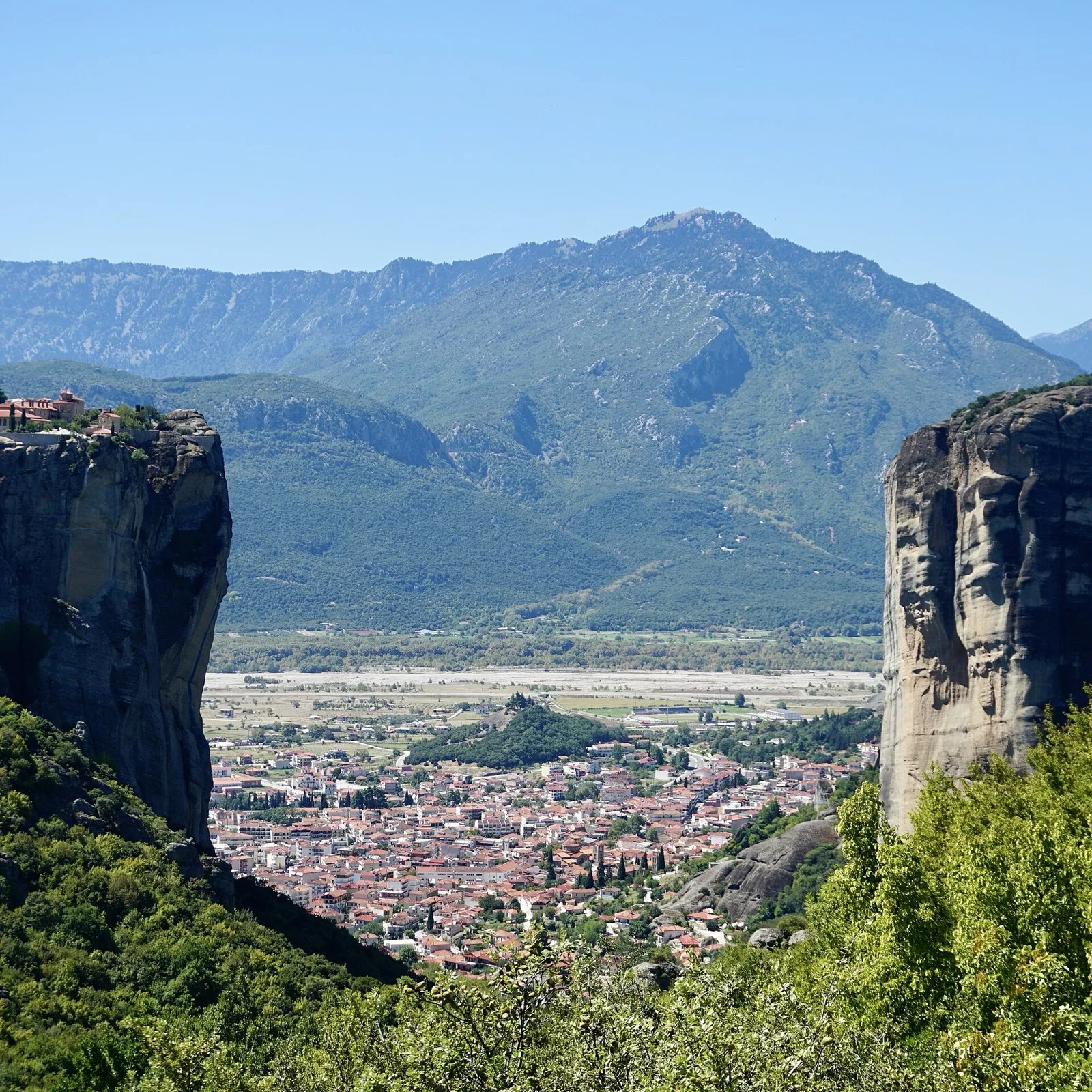
Jedz i pij jak miejscowy mieszkaniec w Meteora
What to order, where to find it, and what it should cost.
Dania, których nie powinieneś zostawiać bez spróbowania
- Kontosouvli — spit-roasted pork, the plate Kalambaka tavernas are known for. Share one between two with salad.
- Thessaly grilled meats — lamb chops, mixed grill, village sausages. This is inland meat country, not island fish.
- Trahana — owsianka lub zupa na kwaśnej pszenicy. Zamów go w chłodne wieczory jako przystawkę, a nie letni lunch.
- Wino domowe — carafe of local Thessaly red or white with dinner. Ask for the barrel wine, not a branded list.
- Łyżkowe słodycze — fruit preserved in syrup. Buy a jar from a grocer or take the complimentary plate after coffee.
- Horiatiki – sałatka wiejska. Standardowa strona tawerny obok grilla.
- Picnic for the rocks — no cafés at the monasteries (Infotourist). Pack water, nuts and fruit before you go up.
Kultura śniadaniowa i kawowa
Breakfast in Meteora is a bakery and a coffee, not a hotel ritual. Bakeries around the Kalambaka plateia sell pies and bread from early morning; sit-down coffee is €2–3.50 (indicative visitor band, checked Aug 2026). Greeks here eat lightly before the heat and save appetite for a late lunch after the monastery circuit.
There are no cafés at the monasteries (Infotourist). Eat before you climb, and carry water. Kastraki has a handful of village kafeneia if you walk up from Kalambaka — useful after a dawn start, not a full English breakfast. Mid-range hotels often include a buffet; ask what time it starts when you book, because first KTEL monastery buses leave in the morning (confirm the day’s timetable locally).
Rynki i co tam kupić
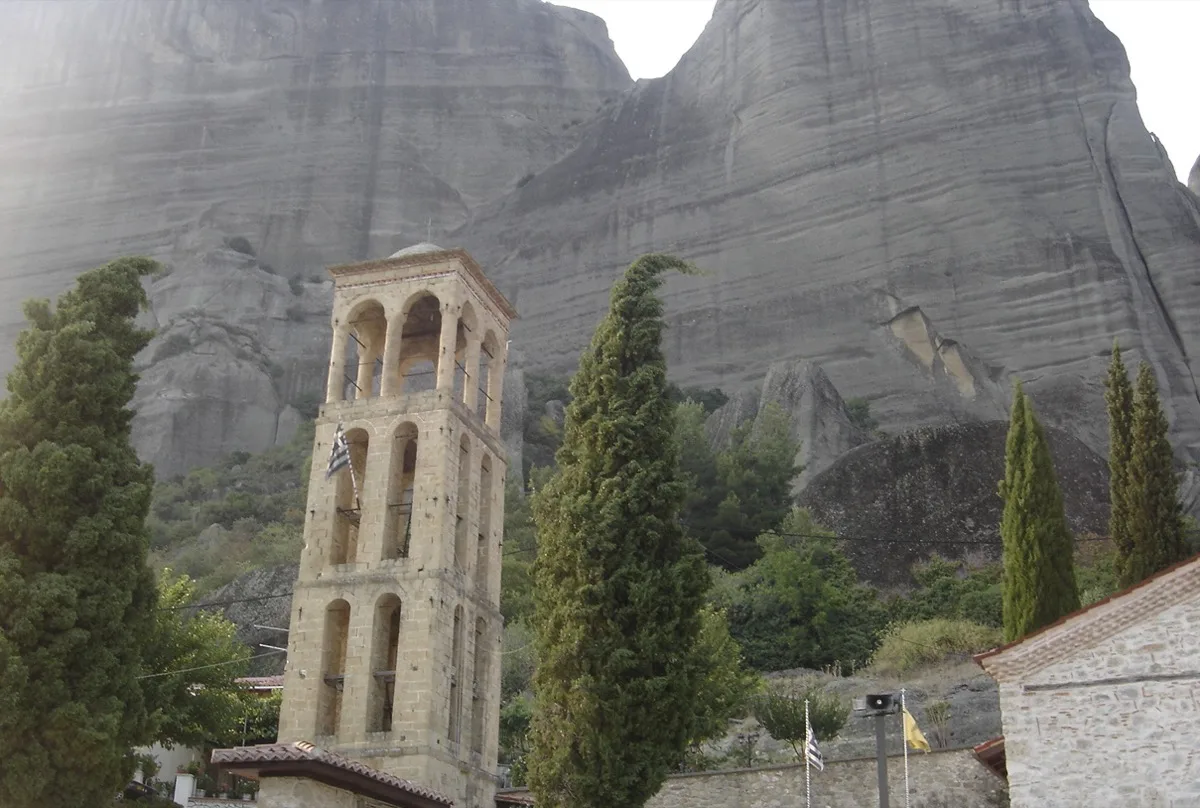
Kalambaka grocers and the weekly street market (day check locally) are where you buy a monastery picnic: water, fruit, nuts, pies. There are no cafés at the houses (Infotourist), and the last thing you want on 200 steps is an empty bottle. Spoon sweets and local honey make the useful souvenir — compare sugar content on the jar before you pack glass in a rucksack.
Supermarkets sit on the main streets toward the station, not on the rock road. Stock up the evening you arrive if you have a dawn start from Kastraki. Trikala (€2.90 KTEL, ktel-trikala.gr, checked Aug 2026) has a larger town-market scene if you want a half-day away from the rocks. Prices at stalls vary — treat any figure as check-locally, not a tariff.
Tawerny i mezedopolei według obszaru
Kalambaka plateia — tawerny mięsne skupione wokół placu i ulic, które go zasilają. To tutaj większość odwiedzających je po zakończeniu toru. Kontosouvli i grille mieszane to uczciwy porządek. Kastraki — smaller village rooms under the rocks; fewer tables, earlier kitchens on quiet nights. Good if you are staying up there and do not want the downhill walk after dark. Monastery circuit — no cafés (Infotourist). Eat before you go up or pack a picnic.
Ask for the day’s grill, not a tourist “Meteora special”. Confirm whether the kitchen still runs if you sit down after 22:00 — this is a small town, not a city meze strip. Cards are common on the plateia; carry cash anyway for monastery gates (€5 typically, confirm at the gate). See Dzielnice za to, jak te dwie osady łączą się pieszo.
Wino, wódki i gdzie je pić
Local Thessaly wine is the default on taverna tables — order a half-litre carafe with the grill rather than hunting a sommelier list. Tsipouro appears on many mainland menus as a short pour with meze; treat prices as check-locally. Beer and ouzo are everywhere. Coffee after dinner is €2–3.50 (indicative, checked Aug 2026).
Drink in Kalambaka or Kastraki, not at the monasteries. Quiet hours near the houses matter — this is a living monastic landscape, not a bar district. A few bars sit on and around the Kalambaka plateia; they are small-town rooms, not club streets. See Życie nocne dla ostatniej rzeczywistości KTEL i numeru taksówki. Supermarkety sprzedają butelkowane greckie wino na balkon, jeśli pokój ma widok na skałę.
Ile właściwie kosztuje posiłek
| Posiłek | Orientacyjny zespół | Notes |
|---|---|---|
| Kawa | 2–3,50 euro | Plateia cafés; none at monasteries |
| Kolacja w tawernie | 12–22 euro | Za osobę typowy grill + sałatka |
| Budget food / day | €15 | Estimator integer — bakery + one plate |
| Mid-range food / day | €30 | Kalkulator — obiad i kolacja |
| Luksusowe jedzenie / dzień | €60 | Estymator — niepublikowana taryfa |
Bands are indicative visitor figures, not official tariffs (checked Aug 2026). A sit-down dinner with house wine usually lands in the €12–22 taverna range. Picnic days cost less because the rocks have no cafés. Add monastery cash separately: typically €5 per house, confirm at the gate. Full daily totals live on Koszt podróży.
Pytania dotyczące jedzenia
Z jakiego jedzenia słynie Meteora?
Kalambaka słynie z tawern mięsnych — mięs z grilla w Tesalii, kontosouvli i mieszanych grillów w wiejskim stylu. Zamów trahana jako przystawkę w chłodniejszych miesiącach, wino domowe w karafce i słodycze na łyżce, jeśli chcesz lokalnego wykończenia. W klasztorach (Infotourist) nie ma kawiarni – jedz w mieście lub Kastraki, a wodę i przekąski noś po skałach.
Ile kosztuje obiad w Meteora?
A taverna dinner typically runs €12–22 per person (indicative visitor band, checked Aug 2026). Coffee is €2–3.50. Budget travellers can eat for about €15 a day using bakeries and one simple plate; mid-range food sits around €30 in the trip estimator. Monastery days need picnic supplies — no cafés at the houses.
Czy restauracje w Meteora oczekują napiwku?
A tip is not obligatory. Service is usually included in taverna culture. Rounding up 5–10% or leaving small change is common after a sit-down meal — treat that as indicative, not a rule. Carry cash for monastery entry (€5 typically, confirm at the gate) even if the taverna takes cards.