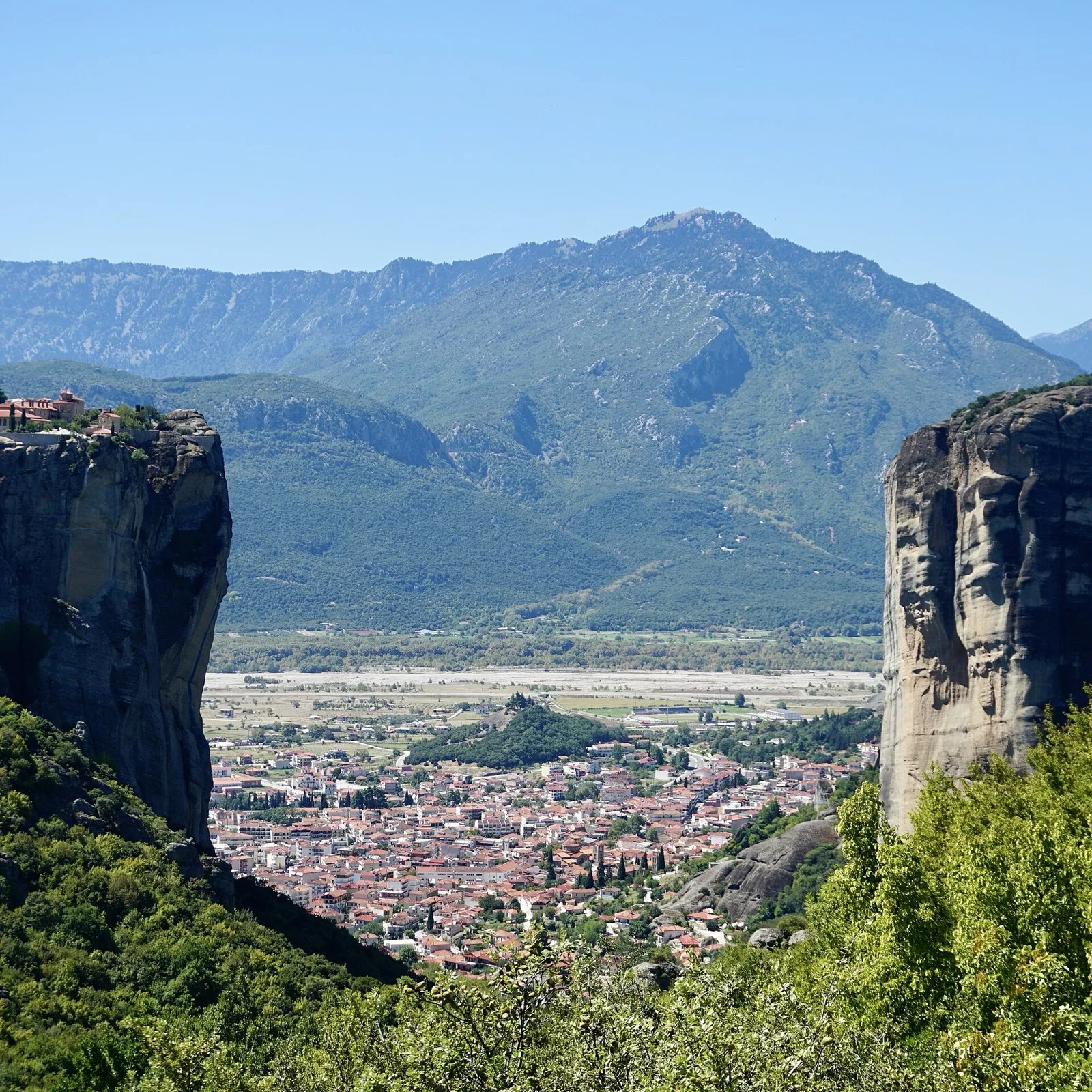
Eat & drink like a local in Meteora
What to order, where to find it, and what it should cost.
Dishes you should not leave without trying
- Kontosouvli — spit-roasted pork, the plate Kalambaka tavernas are known for. Share one between two with salad.
- Thessaly grilled meats — lamb chops, mixed grill, village sausages. This is inland meat country, not island fish.
- Trahana — sour wheat porridge or soup. Order it on cool evenings as a starter, not a summer lunch.
- House wine — carafe of local Thessaly red or white with dinner. Ask for the barrel wine, not a branded list.
- Spoon sweets — fruit preserved in syrup. Buy a jar from a grocer or take the complimentary plate after coffee.
- Horiatiki — village salad. The standard taverna side next to the grill.
- Picnic for the rocks — no cafés at the monasteries (Infotourist). Pack water, nuts and fruit before you go up.
Breakfast and coffee culture
Breakfast in Meteora is a bakery and a coffee, not a hotel ritual. Bakeries around the Kalambaka plateia sell pies and bread from early morning; sit-down coffee is €2–3.50 (indicative visitor band, checked Aug 2026). Greeks here eat lightly before the heat and save appetite for a late lunch after the monastery circuit.
There are no cafés at the monasteries (Infotourist). Eat before you climb, and carry water. Kastraki has a handful of village kafeneia if you walk up from Kalambaka — useful after a dawn start, not a full English breakfast. Mid-range hotels often include a buffet; ask what time it starts when you book, because first KTEL monastery buses leave in the morning (confirm the day’s timetable locally).
The markets and what to buy there
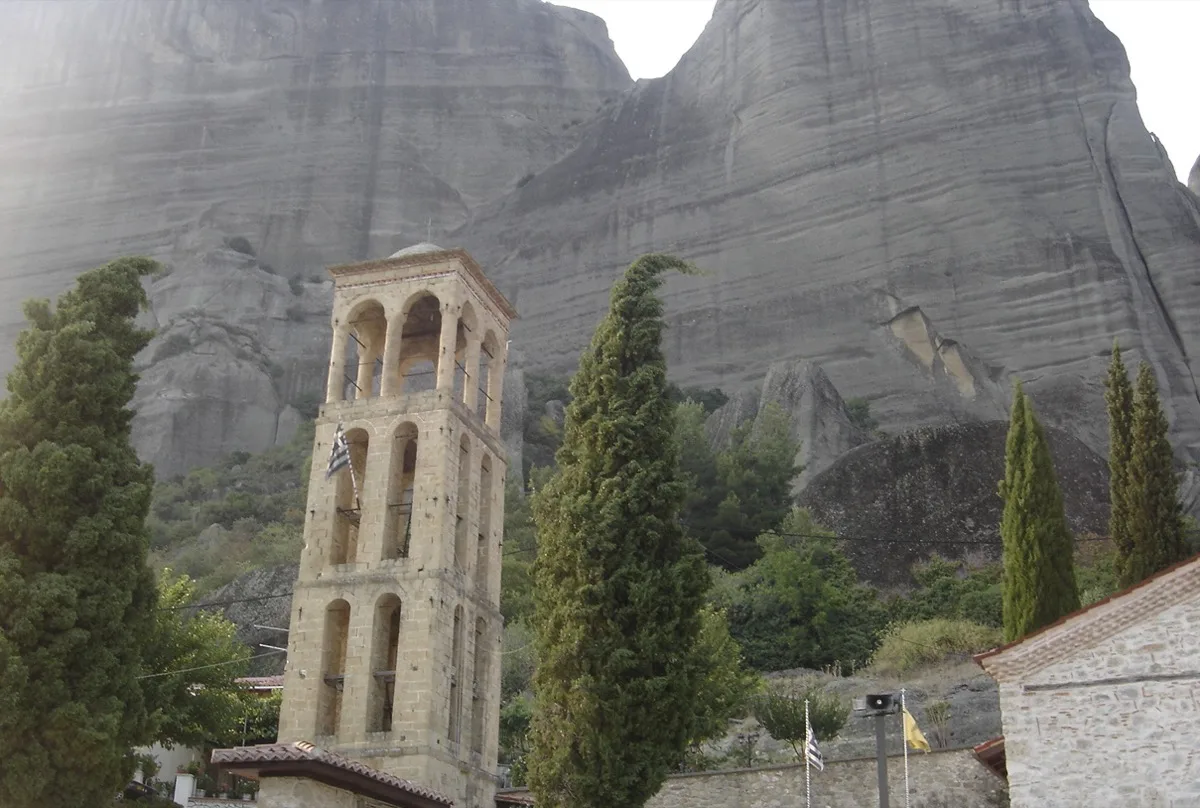
Kalambaka grocers and the weekly street market (day check locally) are where you buy a monastery picnic: water, fruit, nuts, pies. There are no cafés at the houses (Infotourist), and the last thing you want on 200 steps is an empty bottle. Spoon sweets and local honey make the useful souvenir — compare sugar content on the jar before you pack glass in a rucksack.
Supermarkets sit on the main streets toward the station, not on the rock road. Stock up the evening you arrive if you have a dawn start from Kastraki. Trikala (€2.90 KTEL, ktel-trikala.gr, checked Aug 2026) has a larger town-market scene if you want a half-day away from the rocks. Prices at stalls vary — treat any figure as check-locally, not a tariff.
Tavernas and mezedopoleia by area
Kalambaka plateia — meat tavernas clustered around the square and the streets that feed it. This is where most visitors eat after the circuit. Kontosouvli and mixed grills are the honest order. Kastraki — smaller village rooms under the rocks; fewer tables, earlier kitchens on quiet nights. Good if you are staying up there and do not want the downhill walk after dark. Monastery circuit — no cafés (Infotourist). Eat before you go up or pack a picnic.
Ask for the day’s grill, not a tourist “Meteora special”. Confirm whether the kitchen still runs if you sit down after 22:00 — this is a small town, not a city meze strip. Cards are common on the plateia; carry cash anyway for monastery gates (€5 typically, confirm at the gate). See Areas for how the two settlements join on foot.
Wine, spirits and where to drink them
Local Thessaly wine is the default on taverna tables — order a half-litre carafe with the grill rather than hunting a sommelier list. Tsipouro appears on many mainland menus as a short pour with meze; treat prices as check-locally. Beer and ouzo are everywhere. Coffee after dinner is €2–3.50 (indicative, checked Aug 2026).
Drink in Kalambaka or Kastraki, not at the monasteries. Quiet hours near the houses matter — this is a living monastic landscape, not a bar district. A few bars sit on and around the Kalambaka plateia; they are small-town rooms, not club streets. See Nightlife for last KTEL reality and the taxi number. Supermarkets sell bottled Greek wine for a balcony if your room has a rock view.
What a meal actually costs
| Meal | Indicative band | Notes |
|---|---|---|
| Coffee | €2–3.50 | Plateia cafés; none at monasteries |
| Taverna dinner | €12–22 | Per person, typical grill + salad |
| Budget food / day | €15 | Estimator integer — bakery + one plate |
| Mid-range food / day | €30 | Estimator — lunch and dinner |
| Luxury food / day | €60 | Estimator — not a published tariff |
Bands are indicative visitor figures, not official tariffs (checked Aug 2026). A sit-down dinner with house wine usually lands in the €12–22 taverna range. Picnic days cost less because the rocks have no cafés. Add monastery cash separately: typically €5 per house, confirm at the gate. Full daily totals live on Trip Cost.
Where and when to eat in Kalambaka
Lunch on the rocks is a monastery snack or a packed pie. Dinner is Kalambaka plateia. Taverna dinner sits in the published band (city.yaml). Kitchens that face the rocks at sunset fill; walk one street back. We do not invent restaurant names. Order grilled meat, village salad, and whatever pie the tray actually holds that day.
Breakfast is bakery hours, not hotel-only. Last KTEL down from the monasteries is the real lunch constraint — miss it and you eat wherever the taxi driver suggests, at taxi prices. Cards in town; cash at gates and some village rooms.
Food questions
What food is Meteora famous for?
Kalambaka is known for meat tavernas — Thessaly grilled meats, kontosouvli and village-style mixed grills. Order trahana as a starter in cooler months, house wine by the carafe, and spoon sweets if you want a local finish. There are no cafés at the monasteries (Infotourist) — eat in town or Kastraki, and carry water and snacks up the rocks.
How much is dinner in Meteora?
A taverna dinner typically runs €12–22 per person (indicative visitor band, checked Aug 2026). Coffee is €2–3.50. Budget travellers can eat for about €15 a day using bakeries and one simple plate; mid-range food sits around €30 in the trip estimator. Monastery days need picnic supplies — no cafés at the houses.
Do restaurants in Meteora expect a tip?
A tip is not obligatory. Service is usually included in taverna culture. Rounding up 5–10% or leaving small change is common after a sit-down meal — treat that as indicative, not a rule. Carry cash for monastery entry (€5 typically, confirm at the gate) even if the taverna takes cards.